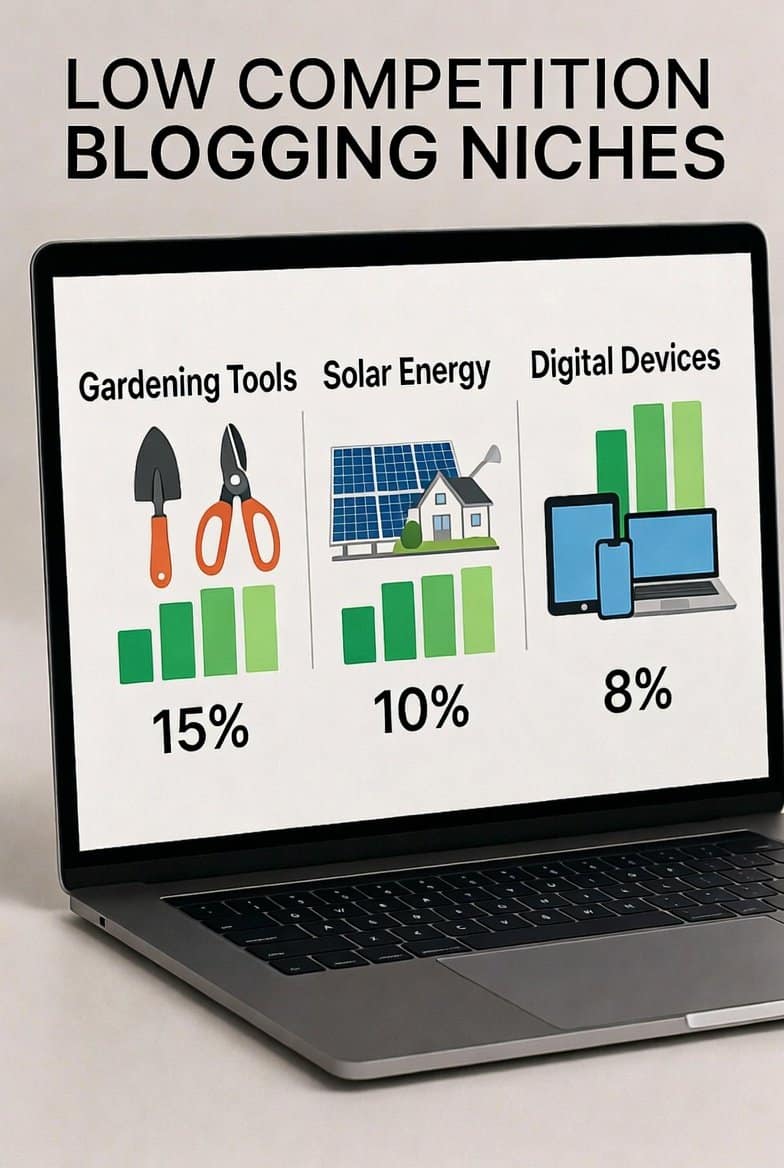
Starting a blog in 2025 can feel overwhelming with millions of sites competing for attention. But here’s the good news: plenty of underserved niches still offer high demand, solid traffic potential, and relatively low competition.
Choosing a low competition blogging niches allows new bloggers to rank faster on Google, build an audience quickly, and monetize through ads, affiliates, or products—without battling giants like BuzzFeed or established authority sites.
In this comprehensive guide, we’ll explore 15 promising low competition niches for 2026. I’ll break down why each one has potential, how to validate it, monetization strategies, and actionable steps to get started. Whether you’re a beginner or looking to launch a second blog, these ideas are backed by current trends in search volume, emerging interests, and gaps in existing content.
Why Focus on low competition blogging niches in 2026?
The blogging landscape has evolved. Broad topics like “personal finance” or “fitness” are saturated, with keyword difficulties often exceeding 70-80 (on tools like Semrush or Ahrefs scales).
Low competition niches—often micro-niches or emerging trends—typically have keyword difficulties under 40, decent monthly search volumes (500+), and room for fresh voices.
Benefits include:
- Faster SEO results: Rank in months, not years.
- Higher engagement: Targeted audiences are passionate and loyal.
- Better monetization: Less noise means higher conversion rates for affiliates or ads.
- Sustainability: Evergreen content performs well long-term.
To succeed, combine passion with data. Use free tools like Google Keyword Planner or paid ones like KeySearch for validation.
Ready to dive in? Let’s look at the top 15.
1. Suburban Homesteading
Urban gardening exploded, but suburban homesteading—focusing on small-yard food production, rainwater harvesting, and DIY sustainability in suburban settings—remains underserved.
Why low competition? Most homesteading content targets rural audiences; suburban twists have lower keyword difficulty.
Potential topics:
- Backyard chicken coops for suburbs
- Composting in small spaces
- Permaculture for HOA-compliant yards
Monetization: Affiliate links for tools (Amazon), sponsored posts from garden brands, or digital guides on Gumroad.
Search potential: Keywords like “suburban vegetable garden ideas” have growing volume with KD <30.
2. Digital Detox and Mindful Tech Use
With screen fatigue at all-time highs, blogs on digital minimalism, tech-life balance, and detox routines are rising—but deep, practical content is scarce.
Why low competition? Broad “productivity” is crowded; specific detox angles aren’t.
Potential topics:
- 30-day digital detox challenges
- Apps for mindful screen time
- Offline hobbies for tech workers
Monetization: Affiliates for journals/planners, courses on mindful living.
3. Gut Health and Fermented Foods
Health niches are competitive, but gut health sub-niches like home fermentation (kombucha, kimchi) offer low-comp entry points.
Why low competition? Specific recipes and beginner guides rank easily.
Potential topics:
- Best fermented foods for beginners
- Gut health meal plans on a budget
Monetization: High-CPC affiliates for supplements/probiotics.
4. Solar Energy for Homeowners
Renewable energy searches have surged 100x since 2010, but homeowner-focused solar (installation guides, costs) has gaps.
Why low competition? Technical content dominates; practical DIY angles don’t.
Potential topics:
- Solar panel costs 2026
- Home solar incentives by state
Monetization: High CPC ($20+) from energy affiliates.
5. Natural Pet Remedies
Pet niche is huge, but natural/holistic remedies (herbs, essential oils for pets) are underserved.
Why low competition? Vet-approved natural options rank with low authority sites.
Potential topics:
- Natural flea remedies for dogs
- Holistic cat anxiety solutions
Monetization: Pet product affiliates (chewy.com alternatives).
6. Freelance Niches for Specific Industries
Freelancing is saturated, but industry-specific (e.g., freelance writing for fintech) has low comp.
Why low competition? Narrow focus beats broad advice.
Potential topics:
- Finding freelance gigs in SaaS
- Rates for niche freelancers
Monetization: Job boards, courses.
7. Urban Microgreens and Apartment Gardening
Indoor/apartment farming (microgreens, hydroponics) appeals to city dwellers.
Why low competition? Beyond basic herbs, advanced tips are rare.
Potential topics:
- Best microgreens for small spaces
- Hydroponic setups under $100
Monetization: Seed/equipment affiliates.
8. Senior Care and Aging in Place
Aging population drives demand for home modifications, meal services.
Why low competition? Emotional/practical guides underserved.
Potential topics:
- Tech for seniors staying home
- Meal delivery reviews for elderly
Monetization: Service affiliates.
9. Matcha and Specialty Teas
Specific teas like matcha have dedicated fans but low blog saturation.
Why low competition? Beyond green tea basics.
Potential topics:
- Matcha grades explained
- Health benefits vs coffee
Monetization: Tea affiliates, recipe eBooks.
10. Small Business Automation Tools
Automation for non-enterprise (salons, mechanics using Zapier).
Why low competition? Enterprise-focused content dominates.
Potential topics:
- No-code tools for local businesses
- Calendly alternatives for service pros
Monetization: SaaS affiliates.
11. Lesser-Known Travel Destinations
Off-the-beaten-path spots (hidden gems in Europe/Asia).
Why low competition? Major cities saturated.
Potential topics:
- Budget travel to underrated countries
- Local festivals in obscure places
Monetization: Booking affiliates.
12. Eco-Friendly Home Improvements
Sustainable renos (zero-waste kitchens).
Why low competition? Broad DIY crowded; green specifics not.
Potential topics:
- Affordable eco upgrades
- Non-toxic paint guides
Monetization: Product affiliates.
13. Bullet Journaling and Creative Planning
Analog planning in digital world.
Why low competition? Visual, niche community.
Potential topics:
- Bullet journal setups for beginners
- Themed spreads
Monetization: Printable sales on Gumroad.
14. Wearable Tech Reviews
Beyond Apple Watch—niche wearables (fitness trackers for seniors).
Why low competition? Mainstream reviews dominate.
Potential topics:
- Best wearables for sleep tracking
Monetization: Amazon affiliates.
15. Alternative Mental Health Approaches
Non-traditional (sound therapy, forest bathing).
Why low competition? Avoid YMYL pitfalls by focusing on lifestyle.
Potential topics:
- Nature therapy guides
Monetization: Wellness products.
How to Validate and Choose Your Niche
- Keyword Research: Use tools to check volume >500, KD <40.
- Competitor Analysis: Look for top sites with DA <50 ranking.
- Passion Check: Can you write 100+ posts?
- Monetization Scan: Search for affiliate programs.
Monetization Strategies for Low Competition Niches
- Google AdSense: Great for traffic-heavy sites. Once you hit consistent visitors, apply for approval.
- Affiliate Marketing: Amazon, ClickBank, or niche programs.
- Digital Products: Sell planners, eBooks, or courses on platforms like Gumroad.
- Sponsored Content: As authority grows.
To host your blog affordably and reliably, I recommend Hostinger—fast loading, excellent support, and plans starting low.
Common Mistakes to Avoid
- Going too broad initially.
- Ignoring SEO basics.
- Not building an email list early. Read more-
16 Profitable Micro Niches for Blogging in 2026: Low-Competition Ideas with High Earning Potential
Why Solar Panels for Homeowners is the Best Micro Niche for Blogging in 2026: 15 Low Competition Blogging Niches for 2026: Profitable Ideas to Start Your Blog TodayTake Action on Your Blogging Journey on low competition blogging niches
Low competition niches in 2025 reward focused, value-driven creators. Pick one that excites you, validate with research, and start publishing consistently.
Your first post doesn’t need perfection—just momentum.
Ready to build a profitable blog? Grab hosting via Hostinger, outline 20 post ideas, and launch.
For more tips on blogging, writing, and online income, subscribe to my newsletter at Writers’ Hive—weekly insights delivered straight to your inbox.
Happy blogging!
TAMZIDUL HAQUE 🖋️Writer
https://tamzidulhaque.com/ | https://medium.com/@tamzidulhaque
https://writers-hive.beehiiv.com/ | https://substack.com/@haquetalks
FAQ-low competition blogging niches
What is a low competition blogging niches?
A low competition blogging niche is a specific topic with decent search demand but few high-authority sites dominating rankings, making it easier for new blogs to gain visibility.
How do I find low competition niches in 2026?
Use keyword tools to search for terms with monthly volume 500+ and difficulty <40. Analyze competitors and trends on Google Trends or forums.
Are low competition niches profitable?
Yes, many are—through AdSense, affiliates, or products. Focus on niches with commercial intent (e.g., reviews, guides).
Can beginners succeed in blogging niches?
Absolutely. Low competition levels the field; consistency and quality content are key.
What tools help find blogging niches?
Free: Google Keyword Planner, Trends. Paid: Semrush, Ahrefs, KeySearch.
How long to see traffic in a low competition niche?
With good SEO, 3-6 months for initial rankings; 12+ for significant traffic.
Should I niche down further?
Yes—micro-niches reduce competition even more while targeting passionate audiences.