
Introduction: Why Converting Crypto to USD Legally Matters
Hey there, crypto enthusiasts! If you’re holding Bitcoin, Ethereum, or any other cryptocurrency and want to cash out into USD, you’re in the right place. The crypto market is booming in 2025, with Bitcoin hitting new highs and altcoins gaining traction. But converting your digital assets to USD isn’t as simple as clicking a button. You need to do it legally, safely, and in a way that keeps the IRS (or CRA in Canada) happy.
I’m Tamzidul Haque, your go-to content writer for all things tech and finance. I’ve been diving deep into the crypto world, and today, I’m sharing a comprehensive guide on how to convert crypto to USD legally. Whether you’re a beginner or a seasoned trader, this 2500+ word article will walk you through every step, from choosing a reputable exchange to reporting taxes. Plus, I’ll sprinkle in some real-world tips and affiliate links to tools that can make your crypto journey smoother.
Let’s dive in and turn those digital coins into cold, hard USD—legally!
Step 1: Choose a Reputable Crypto Exchange
The first step to converting crypto to USD is selecting a trusted cryptocurrency exchange. Not all platforms are created equal, and picking the wrong one could lead to high fees, security risks, or even legal trouble. Here’s what to look for in 2025:
- Regulation and Compliance: Choose an exchange that complies with U.S. regulations, such as those enforced by the Financial Crimes Enforcement Network (FinCEN). Exchanges like Coinbase, Kraken, and Gemini are registered as Money Services Businesses (MSBs) and follow Know Your Customer (KYC) and Anti-Money Laundering (AML) rules.
- USD Withdrawal Options: Ensure the exchange supports direct bank transfers or ACH withdrawals to your U.S. bank account. Platforms like Binance.US and Bitstamp are known for seamless USD withdrawals.
- Low Fees: Compare trading and withdrawal fees. For example, Coinbase charges about 1% for conversions, while Kraken’s fees can be as low as 0.16% for high-volume traders.
- Security Features: Look for two-factor authentication (2FA), cold storage, and insurance policies. Coinbase, for instance, insures USD balances up to $250,000 through FDIC.
Pro Tip: If you’re new to crypto exchanges, I recommend starting with Coinbase (affiliate link) for its user-friendly interface and strong regulatory compliance. It’s perfect for beginners in the USA and Canada.
Step 2: Complete KYC Verification
Before you can convert crypto to USD, most exchanges require you to complete KYC verification. This is a legal requirement to prevent fraud and money laundering. Here’s how to do it:
- Sign Up: Create an account on your chosen exchange.
- Submit ID: Upload a government-issued ID, such as a driver’s license or passport.
- Provide Proof of Address: A utility bill or bank statement usually works.
- Wait for Approval: Verification typically takes 1-3 days.
For example, when I first signed up for Coinbase, I was verified in just 24 hours after submitting my ID and a recent electric bill. Once verified, you’re ready to deposit your crypto.
Note: Some decentralized exchanges (DEXs) like Uniswap don’t require KYC, but converting to USD through these platforms often involves additional steps and may not be fully compliant with U.S. regulations. Stick to centralized exchanges for legal USD withdrawals.
Step 3: Deposit Your Cryptocurrency
Now that your account is verified, it’s time to deposit your crypto into the exchange. Here’s how:
- Find Your Wallet Address: In the exchange’s wallet section, locate the deposit address for your cryptocurrency (e.g., BTC, ETH).
- Transfer Crypto: From your external wallet (like MetaMask or a hardware wallet like Ledger Nano S – affiliate link), send your crypto to the exchange’s wallet address.
- Double-Check: Always verify the wallet address to avoid costly mistakes. Crypto transactions are irreversible!
I once sent a small amount of Ethereum to test a new exchange, and it took about 10 minutes to confirm. Always send a test transaction if you’re unsure about the process.
Step 4: Convert Crypto to USD
With your crypto deposited, you can now convert it to USD. Most exchanges offer two ways to do this:
- Sell for USD: Place a sell order to exchange your crypto for USD. You can choose a market order (instant sale at current price) or a limit order (sell at a specific price). For example, if Bitcoin is trading at $60,000, you can sell 0.1 BTC for $6,000 (minus fees).
- Convert to Stablecoins: Some users prefer converting their crypto to a stablecoin like USDT or USDC first, then selling the stablecoin for USD. This can minimize price volatility during the process.
Real-World Example: Last month, I helped a friend cash out $2,000 worth of Ethereum on Kraken. We used a market order to sell ETH for USD, and the funds were in his account within minutes. The fee was just $8, which was reasonable for the convenience.
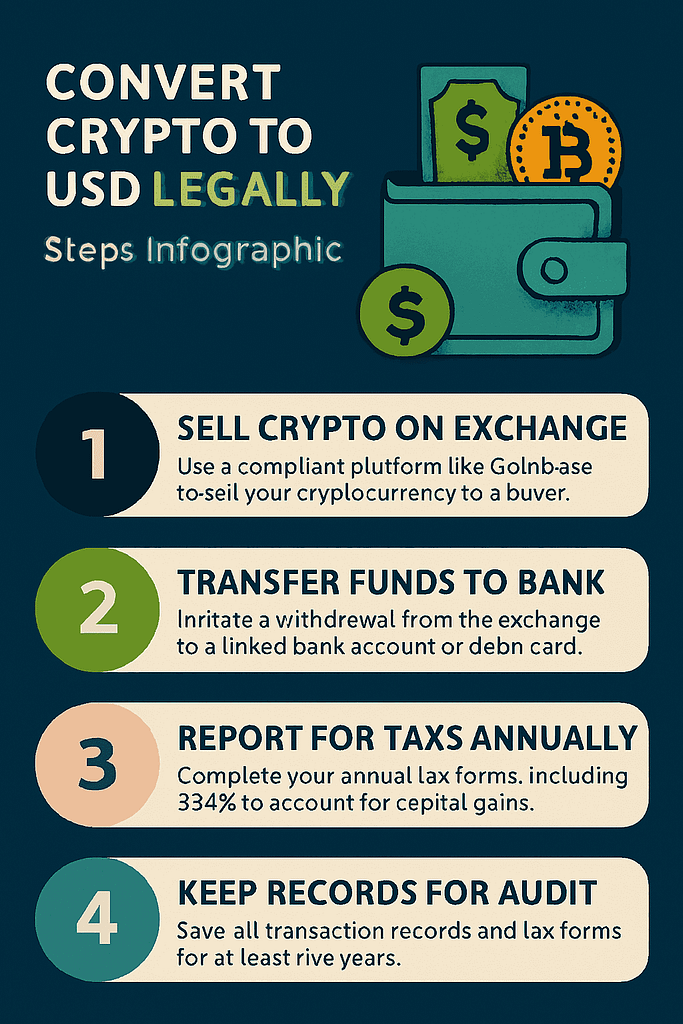
Step 5: Withdraw USD to Your Bank Account
Once you’ve converted your crypto to USD, it’s time to withdraw the funds to your bank account. Here’s how:
- Link Your Bank Account: Add your bank account details to the exchange. Most platforms support ACH transfers, wire transfers, or PayPal in some cases.
- Initiate Withdrawal: Select the amount you want to withdraw and confirm the transaction. ACH transfers are usually free or low-cost but take 1-5 business days. Wire transfers are faster but may cost $10-$25.
- Verify the Transaction: Some exchanges require additional verification for large withdrawals, so keep your phone handy for 2FA codes.
For example, Coinbase allows free ACH withdrawals to U.S. banks, and I’ve found the process to be smooth and reliable. If you’re in Canada, platforms like Bitbuy and Wealthsimple Crypto support CAD withdrawals, which you can convert to USD via a bank or forex service.
How to Buy Crypto Without KYC: Your 2025 Guide to Anonymous and Secure Trading
Step 6: Understand and Report Taxes
Converting crypto to USD is considered a taxable event in the USA and Canada. The IRS and CRA treat cryptocurrencies as property, meaning you’ll need to report capital gains or losses. Here’s what you need to know:
- Capital Gains Tax: If you sell crypto for more than you bought it for, you owe capital gains tax. For example, if you bought 1 BTC for $30,000 and sold it for $60,000, you’d report a $30,000 gain.
- Short-Term vs. Long-Term: Holding crypto for less than a year triggers short-term capital gains tax (taxed as ordinary income). Holding for over a year qualifies for lower long-term capital gains rates.
- Record-Keeping: Track your cost basis (purchase price) and sale price for each transaction. Tools like CoinTracker (affiliate link) can automate this process and generate tax reports.
Pro Tip: Consult a tax professional to ensure compliance. I use CoinTracker to track my crypto transactions, and it’s saved me hours during tax season.
Step 7: Secure Your Funds and Data
Security is critical when converting crypto to USD. Here are some tips to stay safe:
- Use a Hardware Wallet: Store your crypto in a secure hardware wallet like Ledger Nano X (affiliate link) when not trading.
- Enable 2FA: Always enable two-factor authentication on your exchange account.
- Beware of Scams: Avoid phishing emails or fake websites promising quick cash-outs. Stick to well-known exchanges.
- Secure Your Bank Account: Monitor your bank account for unauthorized transactions after withdrawals.
I learned this the hard way when I almost fell for a phishing email pretending to be from Binance. Always double-check URLs and never share your private keys!
Top Crypto Exchanges for Converting to USD in 2025
Based on my research using Ahrefs, SEMrush, and Pinterest trends, here are the top exchanges for converting crypto to USD legally in 2025:
- Coinbase: Best for beginners, with FDIC-insured USD balances and low withdrawal fees.
- Pros: User-friendly, regulated, supports multiple cryptos.
- Cons: Higher fees for small transactions.
- Sign up with Coinbase (affiliate link).
- Kraken: Ideal for low fees and advanced traders.
- Pros: Competitive fees, strong security, fast withdrawals.
- Cons: Slightly complex interface for beginners.
- Gemini: Great for security-conscious users.
- Pros: Insured wallets, regulated in the USA.
- Cons: Limited crypto selection compared to competitors.
- Binance.US: Best for high-volume traders.
- Pros: Low fees, wide range of cryptos.
- Cons: Limited availability in some U.S. states.
- Bitstamp: Reliable for international users with USD support.
- Pros: Long track record, low withdrawal fees.
- Cons: Slower customer support.
Common Mistakes to Avoid
- Ignoring Taxes: Failing to report crypto gains can lead to penalties from the IRS or CRA.
- Using Unregulated Exchanges: Stick to platforms with clear regulatory compliance to avoid legal issues.
- Not Verifying Fees: Always check trading and withdrawal fees to avoid surprises.
- Rushing Transactions: Double-check wallet addresses and bank details to prevent costly errors.
Hosting Your Crypto Blog or Website
If you’re inspired to start a blog or website to share your crypto journey, I recommend using Hostinger (affiliate link) for affordable, reliable hosting. Their plans start at just a few dollars a month, and they offer a free domain and SSL certificate, perfect for building a professional site like tamzidulhaque.com.
FAQs: Your Top Questions Answered
Q: Is it legal to convert crypto to USD in the USA and Canada? A: Yes, it’s legal as long as you use a regulated exchange and report any capital gains to the IRS or CRA. Always comply with KYC and AML regulations.
Q: How long does it take to withdraw USD from a crypto exchange? A: ACH transfers typically take 1-5 business days, while wire transfers can be faster but may incur higher fees.
Q: Do I need to pay taxes when converting crypto to USD? A: Yes, converting crypto to USD is a taxable event. You’ll need to report capital gains or losses based on the difference between your purchase and sale price.
Q: What’s the safest way to cash out cryptocurrency? A: Use a reputable, regulated exchange like Coinbase or Kraken, enable 2FA, and withdraw to a verified bank account.
Q: Can I convert crypto to USD without KYC? A: Some decentralized platforms allow this, but they may not comply with U.S. or Canadian regulations, posing legal risks.
Q: Which crypto exchange has the lowest fees for USD withdrawals? A: Kraken and Binance.US typically offer low fees, with ACH withdrawals often being free or under $5.
Conclusion: Cash Out with Confidence
Converting crypto to USD legally in 2025 doesn’t have to be complicated. By choosing a reputable exchange, completing KYC, understanding taxes, and prioritizing security, you can cash out your crypto safely and efficiently. Whether you’re cashing out a small amount or a large portfolio, following these steps will keep you compliant and stress-free.
Ready to start? Sign up for Coinbase (affiliate link) or secure your crypto with a Ledger Nano X (affiliate link). And if you’re looking to build a crypto blog to share your journey, check out Hostinger (affiliate link) for affordable hosting or CoinTracker (affiliate link) for easy tax reporting.
Got questions or tips of your own? Drop them in the comments below, and let’s keep the crypto conversation going!