Haboob came without warning. One moment you don’t know what haboob is. Phoenix was bathed in golden light. The next, a wall of dust taller than skyscrapers swallowed the skyline. Flights grounded. Power cut. Visibility gone. This wasn’t a scene from a disaster movie—it was a real-life haboob which i recently observed in august 2025
What Is a Haboob? How Haboob Named?
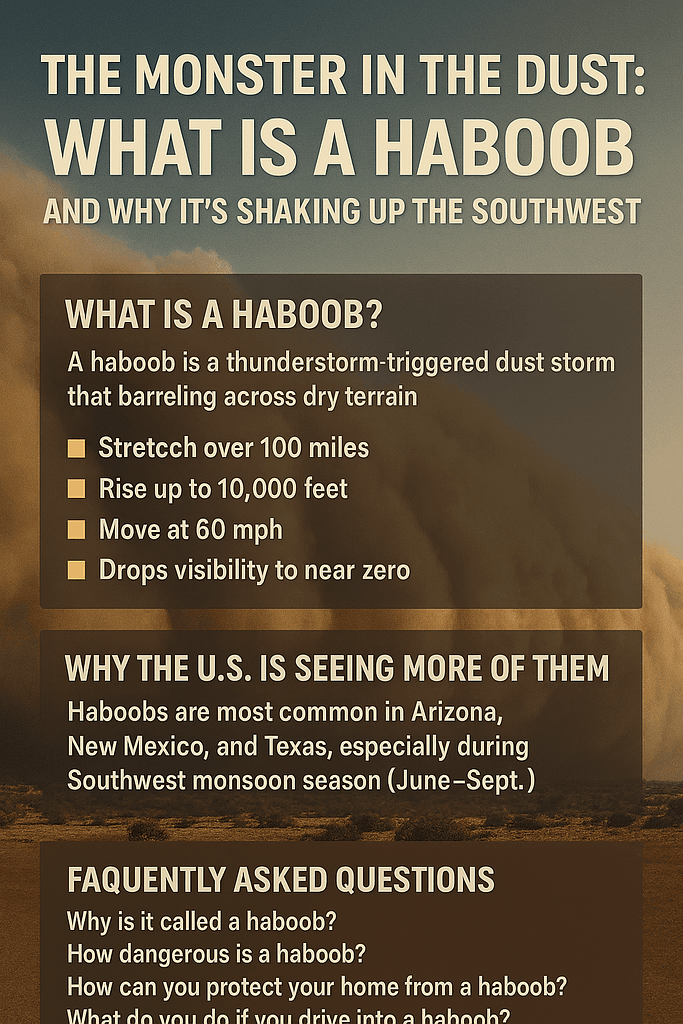
A haboob is a thunderstorm-triggered dust storm that barrels across dry terrain like a cinematic villain. Fueled by collapsing storm cells, these walls of dust can:
- Stretch over 100 miles
- Rise up to 10,000 feet
- Move at 60 mph
- Drop visibility to near zero
The term comes from Arabic—hab, meaning “to blow.” And blow it does. Through highways, airports, and entire cities.
Why the U.S. Is Seeing More of Them
Haboobs are most common in Arizona, New Mexico, and Texas, especially during the Southwest monsoon season (June–September). But climate shifts, land degradation, and urban sprawl are intensifying their frequency and scale4.
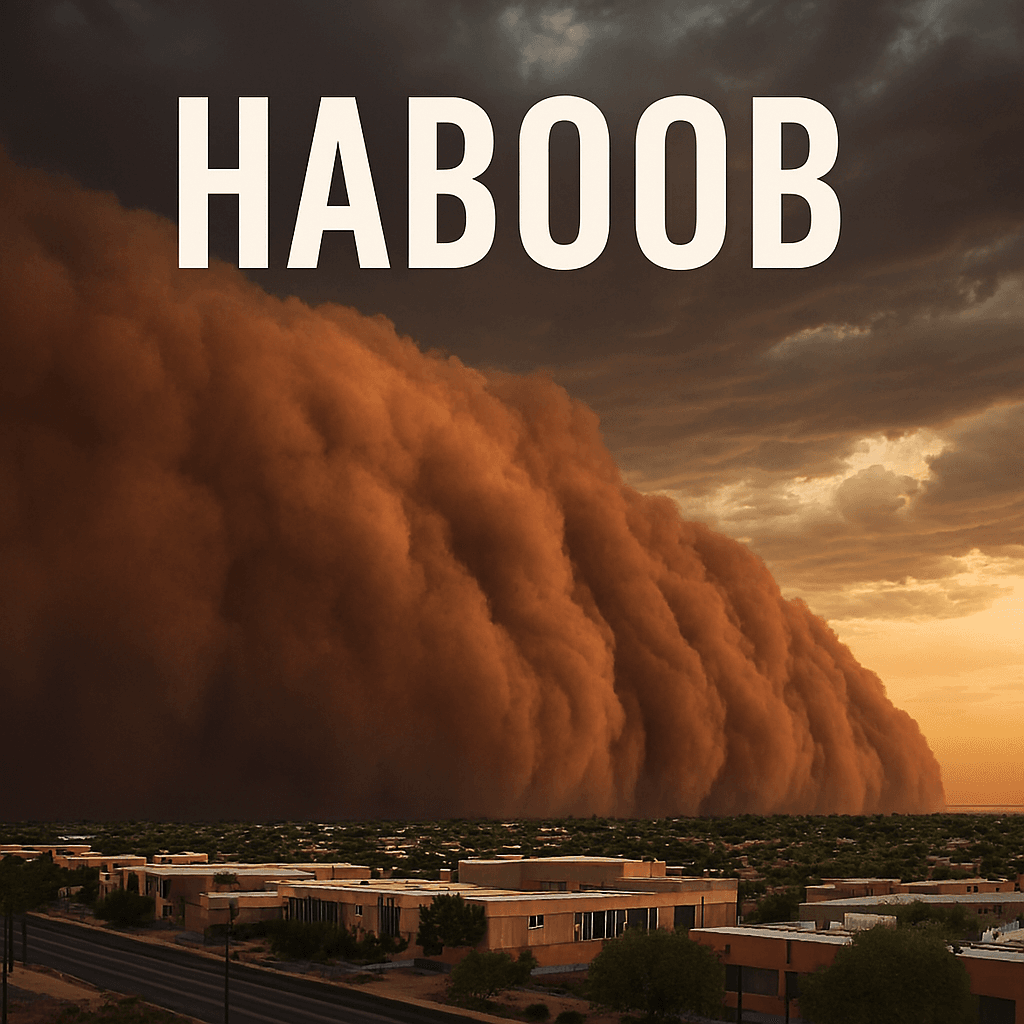
In August 2025, a haboob plunged Phoenix into darkness, grounded flights at Sky Harbor Airport, and left over 60,000 residents without power.
The Science Behind the Spectacle
- Downdrafts from collapsing thunderstorms hit the ground and spread outward.
- These winds lift loose dust and sand, forming a dense wall.
- The storm’s leading edge brings a sharp temperature drop, followed by choking dust and high winds.
On radar, haboobs appear as distinct outflow boundaries—meteorologists track them like incoming missiles.
Why It Matters for US
- Health Risks: Fine dust particles (PM10) can trigger asthma and respiratory issues.
- Driving Danger: Visibility can vanish in seconds. ADOT advises pulling over, turning off lights, and waiting it out.
- Home Safety: Seal windows, use air purifiers, and avoid outdoor exposure during alerts
How to Stay Safe During a Haboob
A haboob is a fast-moving dust storm triggered by collapsing thunderstorms. These walls of dust can stretch over 100 miles, rise up to 10,000 feet, and move at speeds of 60 mph. Visibility can drop to near zero in seconds, making them dangerous for both health and travel.Read bangldessh top news –The July Declaration of Bangladesh:2024
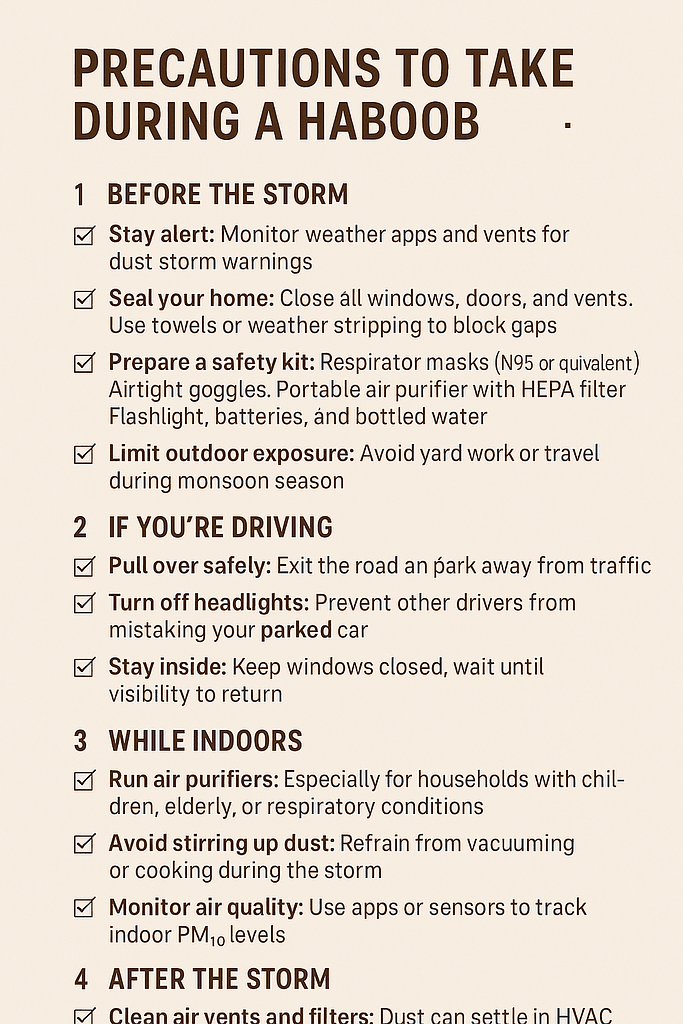
Before the Storm: Preparation Tips
- Stay informed: Monitor weather alerts through trusted apps or NOAA radio.
- Seal your home: Check windows, doors, and vents for gaps. Use weather stripping or towels to block dust entry.
- Prepare an emergency kit:
- N95 masks or cloth respirators
- Airtight goggles
- Portable air purifier with HEPA filter
- Bottled water, flashlight, and backup batteries
If You’re Driving
- Pull over safely: Exit the road as soon as visibility drops.
- Turn off headlights: This prevents other drivers from mistaking your parked car for a moving one.
- Stay inside the vehicle: Keep windows closed and wait until the storm passes.
Indoors During a Haboob
- Avoid going outside: Stay indoors until the storm fully clears.
- Run air purifiers: Especially important for those with asthma or allergies.
- Limit indoor activity: Avoid vacuuming or cooking, which can stir up dust particles.
Health Considerations
- Protect your respiratory system: Use a damp cloth or mask if caught outside.
- Shield your eyes: Sealed goggles offer better protection than sunglasses.
- After the storm: Clean air vents and rinse your vehicle before restarting it.
Read more-What is a haboob? The science behind the dust blob that swallowed Phoenix | National Geographic
FAQs: Haboobs & U.S. Safety
1. Why is it called a haboob and where does the term come from?
The word “haboob” originates from Arabic (hab meaning “to blow”). It was first used to describe dust storms in Sudan, but meteorologists adopted it to label similar phenomena in the American Southwest.
2. How dangerous is a haboob for drivers in Arizona and Texas?
Extremely. Visibility can drop to zero in seconds, causing multi-car pileups. ADOT recommends pulling off the road, turning off headlights, and waiting for the storm to pass.
3. Can haboobs affect your health even if you’re indoors?
Yes. Fine dust particles (PM10) can infiltrate homes and trigger asthma, allergies, and respiratory issues. Air purifiers with HEPA filters are highly recommended during monsoon season.
4. What should I include in a haboob emergency kit?
For U.S. households, especially in desert regions:
- N95 masks or respirators
- Portable air purifier
- Bottled water
- Flashlight and backup batteries
- Sealed goggles for outdoor exposure Affiliate tie-in: These items can be bundled into a “Desert Storm Survival Kit” for Amazon or Walmart links.
5. Do haboobs happen outside the U.S.?
Absolutely. They’re common in Sudan, Saudi Arabia, and Central Australia. But the U.S. Southwest—especially Phoenix and El Paso—has seen a rise in frequency due to urban sprawl and climate shifts.
6. How do meteorologists track haboobs before they hit?
Radar detects outflow boundaries from collapsing thunderstorms. Weather alerts often precede the storm by 15–30 minutes, giving residents time to prepare.