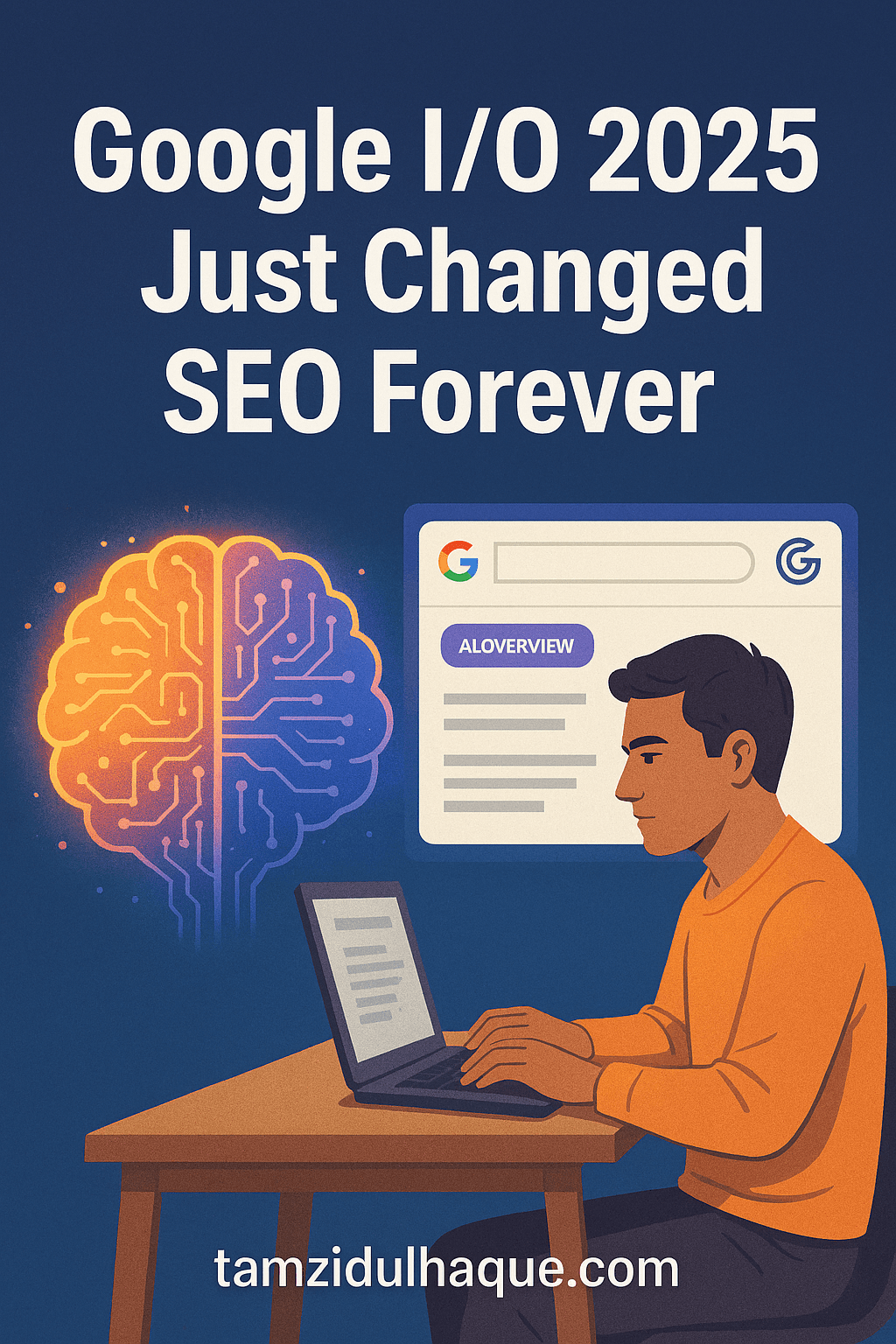
Google I/O 2025 wasn’t just another tech event — it rewrote the SEO rulebook. With AI Overviews, Gemini‑powered search, and multimodal content taking center stage, the old playbook is dead. Here’s what smart creators must do now to survive — and thrive — in the AI‑first era.
In this guide, we’ll break down:
- What changed at Google I/O 2025
- Why SEO as we knew it is “dead”
- Five future-proof strategies to thrive in the new AI-first search era
- Actionable tools and workflows to adapt fast
Let’s dive in.
What Happened at Google I/O 2025?
Google unveiled a suite of AI-powered upgrades that fundamentally reshape how search results are generated and displayed:
1. AI Overviews Take Over the SERP Instead of showing 10 blue links, Google now displays a synthesized AI answer at the top of most queries. This answer pulls from multiple sources, summarizes key points, and often eliminates the need to click through.
2. Gemini 2.5 Powers Search Gemini, Google’s multimodal AI model, now interprets text, images, video, and code simultaneously. It can answer complex questions, generate visuals, and even write code snippets—all within the search interface.
3. Veo 3 and Video Search Google’s new video model, Veo 3, allows users to search inside videos. It can summarize, transcribe, and even generate video content based on queries.
4. Interactive Search Journeys Search is no longer static. Users can now “converse” with Google, refining their queries in real time. This means your content must be ready to serve layered, evolving questions.
Is SEO Dead?
Not exactly. But traditional SEO—keyword stuffing, backlink chasing, and ranking for generic queries—is on life support.Google I/O
Here’s why:
- AI Overviews often bypass your site entirely.
- Google now favors expertise, originality, and multimodal content.
- Search is becoming intent-driven, not keyword-driven.
So what works now? Let’s explore.
Five Smart SEO Strategies for the AI Era
1. Create “AI-Friendly” Content
Your content must be structured so Google’s AI can easily parse, summarize, and cite it.
Use:
- Clear headings (H2, H3)
- Bullet points and numbered lists
- Short, declarative sentences
- Schema markup (FAQ, How-to, Article)
Avoid:
- Long, meandering paragraphs
- Overuse of jargon
- Keyword stuffing
Tip: Use tools like RankMath’s SEO Analyzer to check your structure and schema.
2. Focus on First-Hand Expertise
Google now prioritizes E-E-A-T: Experience, Expertise, Authoritativeness, and Trustworthiness.
Showcase:
- Personal case studies
- Behind-the-scenes workflows
- Real data and screenshots
- Author bios with credentials
Example: Tamzidul’s post on AppSumo 2025 Lifetime Deals ranks well because it blends personal insights with actionable reviews.
3. Optimize for Multimodal Search
Gemini and Veo 3 favor content that includes:
- Text
- Images
- Video
- Code snippets (if relevant)
Add:
- Branded featured images
- Short explainer videos
- Infographics
- Pinterest pins
Need help? Use Canva and CapCut to batch-create assets. Or ask me to generate visuals like the one above.
4. Build Topic Authority, Not Just Page Authority
Google now ranks clusters of content over isolated posts.
Create:
- Pillar pages (e.g., “AI SEO in 2025”, Google I/O in 2025)
- Supporting articles (e.g., “How Gemini Impacts Bloggers”)
- Internal links between them
Example Internal Links:
- How to Absorb Books Like a Genius—10 Tips
- Facebook Post Ideas for Business Pages
Use these to build a web of relevance.
5. Leverage AI Tools to Scale Smartly
Don’t fight AI—use it.
Tools to try:
- ChatGPT / Gemini: for outlines, summaries, and ideation
- Surfer SEO: for content scoring
- CapCut: for video editing
- Canva: for branded visuals
- RankMath: for schema and meta optimization
Bonus Tip: Create a service business like Khalid Farhan’s idea for personal care brands—automating lead nurturing and rebooking flows. SEO isn’t just about ranking—it’s about conversion.
Real-World Workflow: How Tamzidul Optimizes for AI Search
Let’s walk through a real example from TamzidulHaque.com:
Step 1: Create Cinematic Visuals
- Featured image with AI brain and Gemini interface
- Pinterest pin variant for vertical platforms
Step 2: Write Structured, Expert Content
- Clear H2s and bullet points
- Personal insights from brand-building and copywriting
Step 3: Add Schema and Meta Tags
- SEO title: Google I/O 2025 Just Changed SEO Forever
- Meta description: Discover five future-proof strategies to rank and thrive in the age of Gemini and AI Overviews.
Step 4: Link to Authority Posts
- Internal links to AppSumo, Facebook, and learning guides
- External links to Google, HubSpot, and AI tools
Step 5: Repurpose Across Platforms
- Share on Pinterest, LinkedIn, and Google Business Profile
- Use branded overlays and square crops for each platform
Frequently Asked Questions
What is Google AI Overview and how does it affect SEO? Google AI Overview is a new feature that summarizes search results using artificial intelligence. It often replaces traditional blue links by providing synthesized answers, which means your content must be structured and authoritative to be cited.
Is traditional SEO dead after Google I/O 2025? Not entirely, but outdated tactics like keyword stuffing and backlink chasing are no longer effective. Google now prioritizes expertise, originality, and multimodal content that aligns with user intent.
How can I optimize my blog for Gemini-powered search? Use structured headings, include images and videos, add schema markup, and focus on original insights. Gemini favors content that’s easy to parse and rich in media.
What tools should I use to adapt to AI-first SEO? Recommended tools include RankMath for schema and meta tags, Canva and CapCut for visuals and video, Surfer SEO for content scoring, and Gemini or ChatGPT for ideation and summaries.
Can I still rank on Google with blog posts in 2025? Yes, but your posts must be AI-friendly, authoritative, and multimodal. Focus on structured content, internal linking, and visual assets to increase your chances of ranking in AI Overviews and organic results.
Final Thoughts: SEO Isn’t Dead—It’s Just Reborn
Google I/O 2025 didn’t kill SEO. It evolved it.
To thrive, you must:
- Think like an AI
- Create like a human
- Optimize like a strategist
If you’re ready to future-proof your content, start with structure, visuals, and authority. And if you need help building branded assets, internal link maps, or Pinterest workflows—I’m here to co-create.
Would you like this post formatted for WordPress Gutenberg blocks, or turned into a downloadable PDF guide next? Read a bangla blog