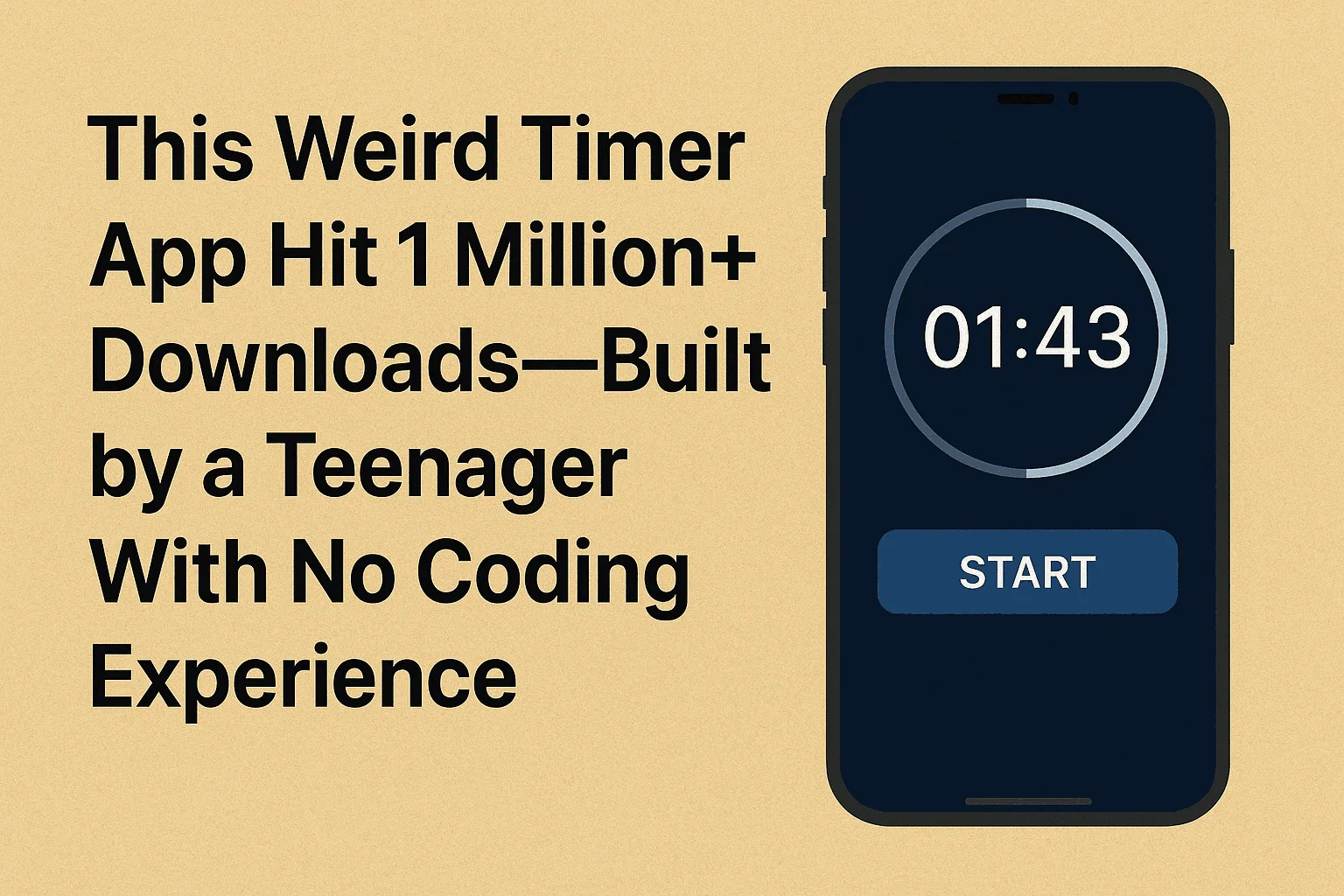
Looking for the best timer app for studying? You might be surprised to learn that one of the most viral productivity apps wasn’t built by a tech company—it was created by a teenager in his bedroom.
Meet Kevin, the high school student behind study bunny app, a minimalist focus timer app that’s now crossed 1 million+ downloads on the App Store and Google Play.
The Problem: Too Many Productivity Apps, Not Enough Simplicity
Kevin struggled to stay focused during study sessions. He tried everything—Pomodoro timers, task planners, ambient music apps—but they all felt cluttered and overwhelming.
What he really wanted was simple:
- A clean timer
- No distractions
- Something emotionally engaging
So during summer break, he taught himself app development using free YouTube tutorials. No coding background. No investors. Just curiosity and a clear problem to solve.
The Solution: study bunny app—Gamified Focus With Emotional Rewards
Kevin’s app idea was delightfully simple: Study to earn coins. Slack off and your bunny gets sad.
Users could spend coins to decorate their bunny’s world, creating a sense of emotional connection and progress. It wasn’t just a timer—it was a gamified study companion.
That emotional hook made it go viral.
How Study Bunny app Went Viral on TikTok and Reddit
Kevin quietly launched Study Bunny in 2019. Within months, it exploded across:
- TikTok productivity communities
- Student subreddits
- YouTube “best study apps” lists
Students loved the idea of “studying with a bunny.” It felt personal, fun, and rewarding.
Today, Study Bunny is one of the most downloaded focus timer apps for students worldwide.
Monetization: How a Free App Earns $5K–$10K/Month
Kevin monetized the app in three smart ways:
- In-app ads (banner + rewarded)
- In-app purchases (buy coins or decorations)
- Optional donation packs for loyal users
Even with conservative revenue estimates of $1–$2 per active user annually, Study Bunny generates $5,000–$10,000/month—all from a free app built by one teenager.
Why Study Bunny app Worked: Simplicity + Emotion + Audience Fit
Kevin didn’t build a revolutionary app. He built something that felt good to use.
- He understood his audience (students)
- He gamified focus
- He added an emotional layer (the bunny)
That’s what made it stick.
No Coding? No Problem. You Can Build Apps Too
If you’re thinking, “I don’t know how to code,” here’s the truth:
You don’t need to.
With today’s no-code app builders and vibe coding tools, anyone can turn a simple idea into a viral product.
Just follow Kevin’s formula:
- Solve a daily frustration
- Keep it simple
- Add a story
- Publish it
If a teenager can build a top-rated timer app with no experience, what’s stopping you?
Final Takeaway: Success Isn’t About Being the Best Programmer
It’s about being the most relatable human.
Kevin’s story proves that emotional design, simplicity, and audience empathy can outperform complex features and big budgets.
So whether you’re a student, creator, or entrepreneur—your next big idea might be hiding in your daily frustrations.