Introduction: Why The Lean Startup is Still Relevant in 2025
Hey there, aspiring entrepreneurs and business builders! If you’ve ever dreamed of launching a startup that doesn’t just survive but thrives, you’ve probably heard of The Lean Startup by Eric Ries. First published in 2011, this game-changing book introduced a methodology that’s still shaping how startups and even established companies innovate in 2025. Whether you’re a solopreneur, a small business owner, or part of a growing team, the Lean Startup methodology offers a roadmap to success by focusing on efficiency, customer feedback, and iterative growth.
In this article, I’m diving deep into The Lean Startup—what it is, why it works, and how you can apply its principles to build a successful business in today’s fast-paced world. From the Build-Measure-Learn cycle to crafting the perfect Minimum Viable Product (MVP), I’ll break it all down in a conversational, easy-to-follow way. Plus, I’ll sprinkle in some fresh 2025 trends, tools, and actionable tips to help you rank higher on Google, earn through AdSense, and even make some affiliate income with my recommended tools. Ready? Let’s get started!
What is the Lean Startup methodology?
The Lean Startup methodology is a smart way to build a business or launch a product — without wasting time or money. Instead of spending months planning, you start small, test fast, and learn quickly.
It was created by Eric Ries to help entrepreneurs avoid failure. The idea is simple: don’t guess what people want — ask them, show them, and learn from their actions.
The Build-Measure-Learn Loop
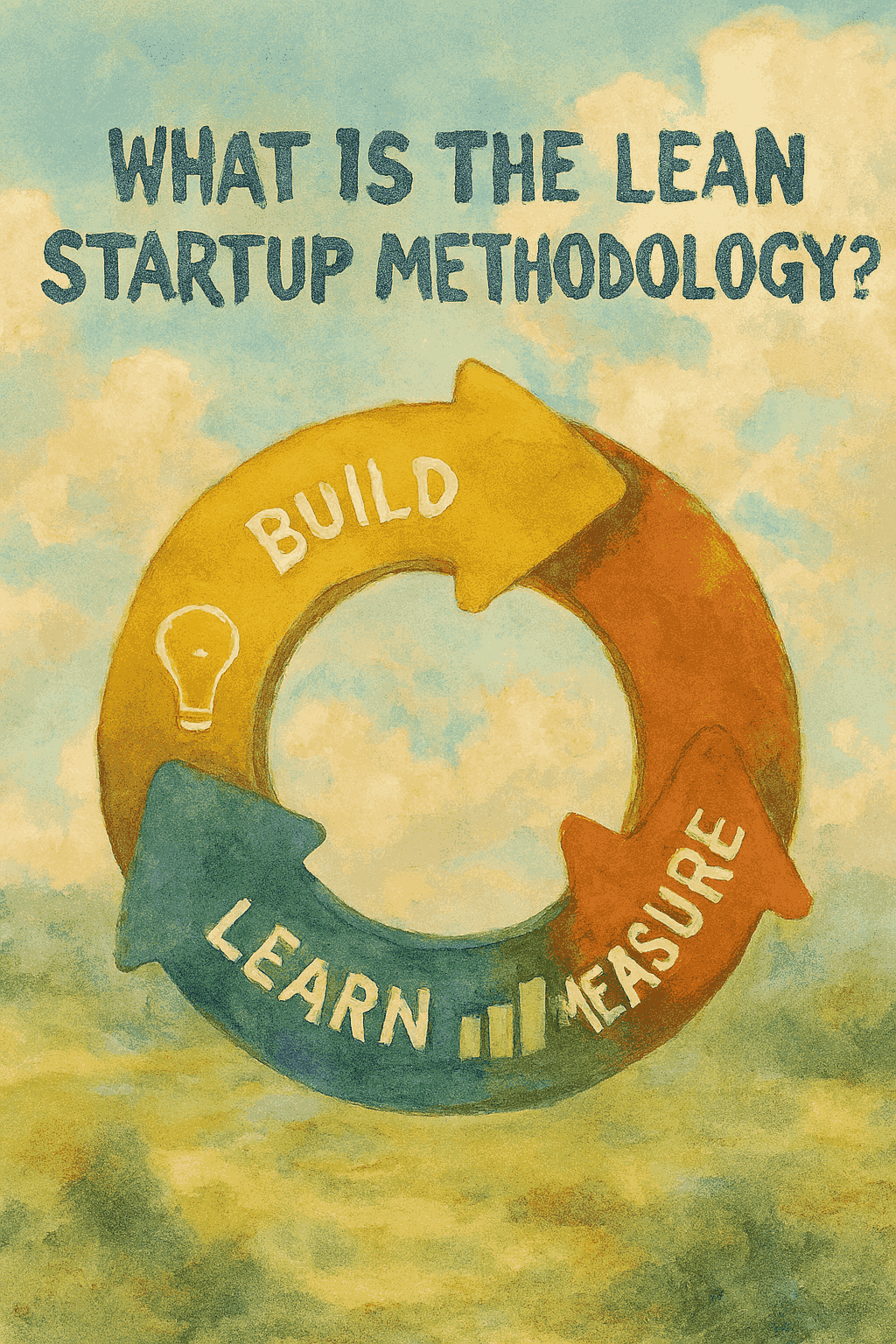
At the heart of Lean Startup is a cycle called Build-Measure-Learn.
- Build: Create a Minimum Viable Product (MVP) — a basic version of your idea.
- Measure: Share it with real users and track how they respond.
- Learn: Use that feedback to improve or change direction.
This loop helps you test ideas quickly. If something doesn’t work, you pivot — change your product, audience, or strategy. If it works, you persevere — keep building and growing.
Why It Works
Lean Startup saves time, money, and energy. You don’t need a perfect product. You need a real problem, a simple solution, and a way to learn fast.
It’s perfect for bloggers, creators, and side hustlers. Whether you’re launching a digital product, a stock photo niche, or a new blog series — start lean, test early, and grow smarter.
What is The Lean Startup?
At its core, The Lean Startup is a methodology that helps entrepreneurs build businesses by testing ideas quickly, learning from customers, and iterating based on real-world feedback. Eric Ries drew inspiration from lean manufacturing principles (think Toyota) and applied them to startups, emphasizing efficiency and adaptability. The goal? To avoid wasting time and resources on products or services that customers don’t actually want.
In 2025, with markets evolving faster than ever thanks to AI, automation, and shifting consumer behaviors, the Lean Startup approach is more relevant than ever. It’s not just for tech startups—it’s for anyone looking to innovate, from e-commerce stores to service-based businesses.
The Core Principles of The Lean Startup
Let’s break down the five key principles of the Lean Startup methodology that you can start applying today:
- Entrepreneurs Are Everywhere You don’t need to be in Silicon Valley or have a tech background to be an entrepreneur. Whether you’re launching a blog, an e-commerce store, or a local service, the Lean Startup approach works for you.
- Entrepreneurship is Management Startups aren’t just about wild ideas—they need a structured process to manage uncertainty. The Lean Startup provides a framework to organize chaos and turn ideas into sustainable businesses.
- Validated Learning Instead of guessing what customers want, you test your ideas with real data. This means launching small experiments to see what works and what doesn’t.
- Build-Measure-Learn This is the heartbeat of the Lean Startup. You build a basic version of your product (the MVP), measure how customers respond, and learn from the results to improve.
- Innovation Accounting Traditional metrics like revenue or profit might not work for startups in their early stages. Instead, focus on actionable metrics—like customer engagement or retention—to track progress.
The Build-Measure-Learn Cycle: Your Secret Weapon
The Build-Measure-Learn cycle is the engine that drives the Lean Startup methodology. Here’s how it works:
- Build: Create a Minimum Viable Product (MVP)—the simplest version of your product or service that lets you test your idea. For example, if you’re launching a blog, your MVP could be a single post targeting a specific keyword like “lean startup principles” to gauge reader interest.
- Measure: Collect data on how customers interact with your MVP. Tools like Google Analytics or Hotjar can help you track clicks, time on page, or user feedback.
- Learn: Analyze the data to decide whether to pivot (change your approach) or persevere (keep refining your idea).
In 2025, tools like AI-powered analytics platforms (e.g., Mixpanel or Amplitude) make it easier than ever to measure customer behavior in real time. Want to set up a website to test your MVP? I recommend Hostinger for affordable, reliable hosting to get your site live quickly. Get started with Hostinger here.
Crafting the Perfect Minimum Viable Product (MVP)
The MVP is all about speed and simplicity. It’s not about building a perfect product—it’s about getting something out there to test your assumptions. Here are some tips for creating an effective MVP in 2025:
- Start Small: If you’re launching an online course, your MVP could be a single video lesson shared on a platform like Teachable.
- Focus on Pain Points: Identify the core problem your product solves. For example, if you’re creating a productivity app, focus on one key feature, like task prioritization, before adding bells and whistles.
- Leverage Tools: Use no-code platforms like Bubble or Carrd to build MVPs without coding skills. For inspiration, check out trending no-code tools on AppSumo—they often have lifetime deals that save you money. Explore AppSumo deals here.
Pro Tip: If you’re selling physical products, consider using Amazon’s FBA (Fulfillment by Amazon) to test your MVP with minimal upfront costs. Check out this Amazon FBA Starter Kit to get started.
Why The Lean Startup Works in 2025
The business landscape in 2025 is dynamic—think AI-driven personalization, hybrid work models, and sustainability-focused consumers. The Lean Startup methodology shines because it’s flexible enough to adapt to these trends. Here’s why it’s still a game-changer:
- Customer-Centric Innovation: With tools like social listening (e.g., Brandwatch) and AI chatbots, you can gather customer feedback faster than ever.
- Cost Efficiency: Bootstrapped startups can’t afford to waste money. The Lean Startup ensures you’re spending on what matters.
- Speed to Market: In a world where trends change overnight (hello, TikTok and X!), launching quickly with an MVP gives you a competitive edge.
According to a 2025 report from CB Insights, 70% of startups fail due to premature scaling—building too much, too soon. The Lean Startup helps you avoid this trap by focusing on validated learning.
Real-World Examples of The Lean Startup in Action
Let’s look at two companies that used Lean Startup principles to succeed:
- Dropbox: Instead of building a fully functional cloud storage platform, Dropbox created a simple demo video to gauge interest. The result? Thousands of sign-ups before the product was even built.
- Zappos: Founder Nick Swinney tested his idea for an online shoe store by taking photos of shoes at local stores and posting them online. Only after getting orders did he buy the shoes to fulfill them—an MVP in action.
These examples show how starting small and iterating based on feedback can lead to massive success.
Tools to Implement The Lean Startup in 2025
To bring your Lean Startup ideas to life, you’ll need the right tools. Here are my top picks, with affiliate links to help you get started:
- Hostinger: Affordable hosting for launching your MVP website or blog. Start with Hostinger.
- AppSumo: Find no-code tools and software deals to build and test your MVP. Browse AppSumo.
- Trello or Notion: Organize your Build-Measure-Learn cycle with project management tools.
- Google Analytics: Track user behavior to measure your MVP’s performance.
- Amazon FBA: Test physical products with minimal upfront investment. Shop Amazon FBA tools.
FAQs
- What is the Lean Startup methodology? The Lean Startup methodology is a business approach that emphasizes building a Minimum Viable Product, testing it with customers, and iterating based on feedback to create a successful product efficiently.
- How does the Build-Measure-Learn cycle work? The cycle involves building a basic product (MVP), measuring customer response with data, and learning whether to pivot or improve the product based on insights.
- What is a Minimum Viable Product (MVP)? An MVP is the simplest version of a product that allows you to test your business idea with minimal resources, gathering feedback to refine it.
- Why is the Lean Startup relevant in 2025? In 2025, rapid market changes and technological advancements make the Lean Startup’s focus on speed, customer feedback, and cost efficiency critical for success.
- Can non-tech businesses use the Lean Startup? Absolutely! The Lean Startup works for any business, from e-commerce to local services, as long as you’re testing ideas and iterating based on feedback.
- What tools help implement the Lean Startup methodology? Tools like Hostinger for hosting, Google Analytics for tracking, and no-code platforms like Bubble or Carrd are great for building and testing MVPs.
- How do I create an effective MVP? Focus on solving one core problem, keep it simple, and use customer feedback to refine your product. Start with affordable tools like Hostinger or AppSumo deals.
- What are some Lean Startup success stories? Companies like Dropbox and Zappos used Lean Startup principles to test their ideas with minimal investment, leading to massive growth.
- How can I measure success in the Lean Startup? Use innovation accounting—track actionable metrics like customer engagement, retention, or feedback rather than traditional revenue metrics.
- Where can I learn more about the Lean Startup? Read The Lean Startup by Eric Ries (available on Amazon) or explore online courses on platforms like Udemy.
Conclusion: Start Lean, Win Big
The Lean Startup methodology isn’t just a buzzword—it’s a proven framework for building businesses that last. By focusing on validated learning, the Build-Measure-Learn cycle, and MVPs, you can create products that customers love without breaking the bank. In 2025, with tools like AI analytics, no-code platforms, and affordable hosting from Hostinger, there’s no excuse not to start lean.
Ready to launch your next big idea? Grab a copy of The Lean Startup on Amazon, explore no-code tools on AppSumo, and let’s make your startup dreams a reality. Need content to promote your business? Contact me at tamzidnewage@gmail.com for top-notch writing services.
Let’s build something amazing together!